

Over 1.12 crore urban houses have been sanctioned under India’s Pradhan Mantri Awas Yojana (Urban), reflecting the scale of residential construction and redevelopment across cities (PMAY-U, Ministry of Housing and Urban Affairs). In Delhi, many DDA flats, builder floors, and independent houses built decades ago now require structured renovation work to meet modern safety, comfort, and design standards.
Renovation of an old house is not just cosmetic improvement. It involves structural checks, waterproofing upgrades, electrical rewiring, plumbing correction, and layout optimization. In simple terms, renovation meaning refers to improving or restoring a house to a better condition. Renovation in Hindi means “पुराने घर को सुधारना या नया रूप देना।”
Renovation of an Old House in Delhi: Where to Start
Delhi Building Bye-Laws were revised in 2016, defining permissible structural modifications and safety requirements for residential properties (Delhi Development Authority, 2016). Before starting renovation work, homeowners must assess what changes are legally allowed, especially in DDA flats and builder floors.
- Structural Assessment First: Inspect load-bearing walls, beams, and slabs before planning layout changes. Removing structural walls without approval can violate safety norms.
- Dampness and Seepage Inspection: Old Delhi houses commonly face terrace leakage and balcony seepage. Waterproofing must be prioritized before cosmetic upgrades.
- Electrical and Plumbing Audit: Houses older than 15–20 years often require rewiring and pipe replacement. Upgrading MCB panels and checking earthing improves safety compliance.
- Budget Planning and Scope Freeze: Define the full scope of renovation at home before execution begins. Changes mid-project increase cost and delay timelines.
- Room-Wise Prioritization: Start with structural and service-related work. Kitchen renovation ideas and aesthetic upgrades should follow only after core repairs are complete.
Structural and Waterproofing Renovation Work in Delhi Homes
The CPWD Works Manual published in 2019 outlines procedural standards for civil repair and structural renovation in India (CPWD Works Manual 2019). These standards emphasize inspection, sequencing, and quality control before aesthetic upgrades begin.
Terrace Waterproofing
Old Delhi houses frequently develop terrace leakage due to weather exposure. Apply a waterproof membrane system before re-tiling. Conduct ponding tests to confirm sealing effectiveness.
Balcony and External Wall Seepage
Hairline cracks in external walls allow water ingress during monsoon. Crack injection and exterior waterproof coating prevent long-term structural damage.
Foundation and Beam Crack Repair
Structural cracks must be evaluated before cosmetic filling. Reinforcement treatment and epoxy injection are required for load-bearing elements.
Plumbing Shaft Inspection
Old galvanized pipes corrode internally. Replace with CPVC or UPVC piping during renovation work to avoid repeated wall breakage.
Damp-Proof Course (DPC) Correction
Rising damp is common in ground-floor properties. Chemical DPC treatment prevents moisture from damaging plaster and paint layers.
Renovation Kitchen Ideas for Old Delhi Houses
The National Building Code of India was revised in 2016, setting safety standards for electrical load, ventilation, and fire protection in residential buildings (Bureau of Indian Standards, NBC 2016). Kitchen renovation in old Delhi houses must align with these safety and service norms.
1. Layout Redesign Based on Work Triangle
Old kitchens often lack functional layout planning. Redesign the sink, stove, and refrigerator positions to create an efficient working triangle and improve movement flow.
2. Electrical Load Upgrade
Modern kitchens use microwaves, chimneys, dishwashers, and induction cooktops. Upgrade wiring and install separate circuits to prevent overload.
3. Chimney and Ventilation Planning
Many older Delhi flats rely on small exhaust fans. Install proper chimney ducting to improve air circulation and reduce grease accumulation.
4. Storage Optimization
Replace traditional cabinets with modular storage systems. Use vertical cabinets and pull-out drawers to maximize compact kitchen space.
5. Countertop and Material Selection
Granite and quartz offer durability and moisture resistance. Avoid porous materials in high-humidity conditions.
6. Plumbing Line Repositioning
Shift plumbing lines carefully to avoid future leakage. Replace old corroded pipes during renovation work to prevent repeated dismantling.
Bathroom Renovation at Home in Delhi
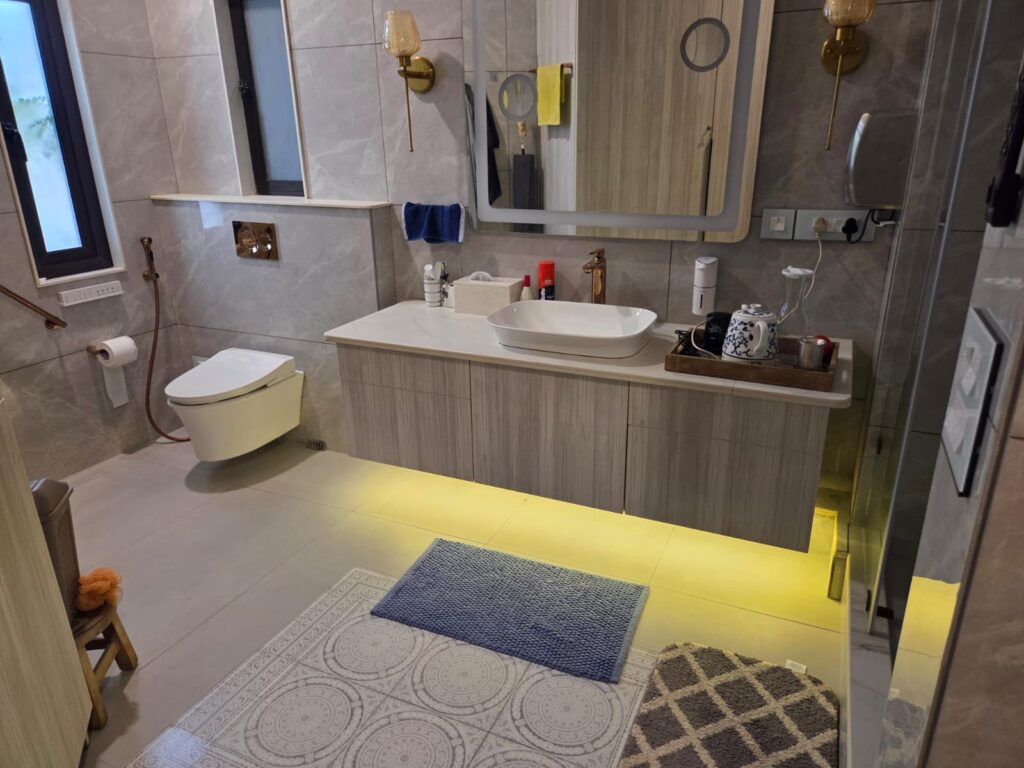
The National Building Code of India was revised in 2016, defining safety standards for plumbing, ventilation, and waterproofing in residential buildings (Bureau of Indian Standards, NBC 2016). Bathroom renovation in older Delhi homes must comply with these guidelines to prevent long-term structural damage.
1. Waterproof Membrane Installation
Old bathrooms often lack proper waterproofing layers. Apply a floor and wall membrane before tile installation to prevent seepage into adjacent rooms.
2. Plumbing Line Replacement
Pipes older than 15–20 years may corrode internally. Replace concealed plumbing lines during renovation work to avoid repeated wall dismantling.
3. Anti-Skid Flooring Selection
Install anti-skid ceramic or vitrified tiles to reduce slip risk, especially in compact urban bathrooms.
4. Ventilation Upgrade
Poor ventilation causes mold and dampness. Install exhaust fans or improve shaft ventilation to maintain air circulation.
5. Proper Drainage Slope
Ensure correct floor slope toward the drain to prevent water stagnation and tile damage.
Space Optimization and Urban Renovation in Delhi
Delhi Building Bye-Laws were revised in 2016, regulating structural changes and balcony modifications in residential properties (Delhi Development Authority, 2016). Urban renovation in Delhi must align with these norms, especially in compact DDA flats and builder floors.
1. Reworking Compact Layouts
Older Delhi homes often have segmented rooms with limited natural light. Removing non-load-bearing partitions can create an open-plan living-dining area while maintaining structural safety.
2. False Ceiling Planning
Install false ceilings only after checking slab height. Maintain minimum clear height standards to avoid creating low, compressed interiors.
3. Storage Wall Integration
Use full-height wardrobes and built-in storage to reduce clutter. Vertical storage is critical in small urban flats.
4. Balcony Optimization
Balconies can be redesigned as study corners or utility spaces, but structural enclosure must comply with local building regulations.
5. Natural Light Enhancement
Replace heavy wooden windows with larger glazed panels where permissible. Improved daylight reduces artificial lighting dependency.
Electrical and Plumbing Upgrade Checklist for Delhi Homes
The Energy Conservation Building Code applies to buildings with connected load of 100 kW or more, highlighting the importance of structured electrical planning in modern buildings (Bureau of Energy Efficiency, ECBC). Even though most Delhi homes fall below this threshold, renovation work should still follow safe load distribution and wiring practices.
1. Complete Electrical Rewiring
Homes older than 20 years often use outdated aluminum or undersized copper wiring. Replace old wiring with fire-resistant copper cables during renovation of an old house.
2. MCB and Distribution Board Upgrade
Install modern MCBs and ELCB/RCCB protection devices to prevent short circuits and electric shock hazards.
3. Proper Earthing System
Check and upgrade earthing connections to ensure appliance safety, especially after adding high-load kitchen equipment.
4. Dedicated Circuits for Heavy Appliances
Air conditioners, ovens, and geysers require separate circuits to prevent overload.
5. Plumbing Pipe Replacement
Replace old GI pipes with CPVC or UPVC pipes to prevent corrosion and leakage.
6. Water Pressure and Drainage Check
Test water pressure levels and ensure proper drainage slope before sealing walls and flooring.
Step-by-Step Renovation Workflow for Delhi Homes
The CPWD Works Manual updated in 2019 outlines procedural sequencing for civil construction and renovation projects in India (CPWD Works Manual 2019). Following a structured workflow reduces rework, cost overruns, and compliance risks during renovation of an old house in Delhi.
Step 1: Property Assessment and Structural Audit: Inspect structural elements, dampness areas, electrical wiring, and plumbing lines before demolition begins.
Step 2: Budget Freeze and Scope Finalization: Finalize renovation work scope, material specifications, and estimated costs. Avoid mid-project design changes.
Step 3: Design Planning and Approvals: Prepare layout plans, especially if modifying non-load-bearing walls. Ensure compliance with Delhi building regulations.
Step 4: Structural and Waterproofing Work: Execute crack repairs, terrace waterproofing, plumbing shaft correction, and foundational fixes first.
Step 5: Electrical and Plumbing Installation: Complete rewiring, MCB upgrades, pipe replacement, and service testing before wall closure.
Step 6: Flooring and Wall Finishes: Install flooring, tile work, plaster, and paint only after core services are tested.
Step 7: Kitchen and Bathroom Installation: Fit modular kitchen systems, sanitary fixtures, and ventilation units.
Step 8: Final Inspection and Handover: Conduct safety checks and quality inspection before project closure.
Over 1.12 crore urban houses have been sanctioned under India’s PMAY-Urban mission, reflecting the scale of residential development and redevelopment across cities (Ministry of Housing and Urban Affairs). In Delhi, many aging DDA flats, builder floors, and independent houses require structured renovation work to meet current safety standards defined in the 2016 National Building Code and updated building bye-laws.
If you are planning renovation at home and need reliable Renovation Services in Delhi, work with an experienced renovation company in Delhi that understands structural compliance, material quality, and project sequencing.
AN Decor delivers structured renovation solutions for old houses in Delhi, combining technical expertise, detailed planning, and execution-focused design to ensure safe and durable transformation of your property.